Pawpaw Tree Asimina triloba at Pine Hollow Arboretum
Remember when you were a kid in school and were taught the PawPaw Patch Song? You know, “Where, oh where, oh where is Susie? Where, oh where, oh where is Susie? Way down yonder in the pawpaw patch… Pickin’ up pawpaws, put ‘em in a basket… way down yonder in the pawpaw patch.” I know I’m dating myself because my daughter (8th grade) and son (2nd grade) have never heard of the song but I learned it -- way back when. I remember singing the song in grade school but I had no idea what a pawpaw was and didn’t know what one was until today. I was visiting the Arboretum and talking with my father-in-law, John Abbuhl, about fall fruiting trees on the property. He said he has a few and asked me if I had ever seen a pawpaw tree and since I had not, he said “come with me.” We walked down the trail by the pond, over the bridge and there they were.
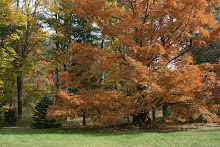
 Beginning of Pawpaw grove at Pine Hollow Arboretum
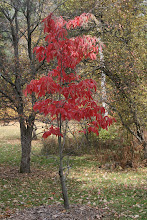
Pawpaw or Asimina Triloba is a deciduous, conical tree grows between 12 to 20 feet. It was first discovered in 1541 by the Spanish explorer, Hernando Desoto on an excursion to the Mississippi Valley but has long been recognized as a source of food by indigenous Americans for centuries before that. Apparently, Lewis and Clark ate them during their epic journey across North America. They are often referred to as Poor Man’s Banana. The tree produces root suckers a few feet from the trunk and when allowed to grow can create a new tree which is why the Arboretum now has a cluster of pawpaws which are located at the eastern end of the magnolia grove near the mid-pond hill. The tree has droopy, oblong shaped green leaves that grow up to 12 inches long. The leaf color is medium green in the summer and turns yellow in the fall. The leaves begin to fall off in mid-autumn and leaf out again in late spring. The pawpaw produces an upside-down maroon flower up to 2 inches across usually during March to May depending on the climate where it’s growing. The pawpaw tree likes filtered sunlight for the first two years after planting then full sun. The deer do not seem to like the leaves or twigs but raccoons, squirrels and foxes will eat the fruit.
 Pawpaw leaves turning yellow in Autumn
The pawpaw fruit is the largest edible fruit native to America. Each fruit can weigh between 5 to 16 ounces and can be 3 to 6 inches long. They are similar in shape to a potato and can grow in clusters from one to nine fruits. The skin of the pawpaw is thin and edible but people usually peel it off prior to eating. The skin color is green and turns yellow when it is ripe in September - October. When you touch a ripe pawpaw fruit it should be soft to the squeeze. You may think it’s a sign of it being overripe but it’s not. If the skin is brown or black it is overripe. When you cut into a pawpaw you will see two rows of brown/black seeds shaped like lima beans. The color of the pulp can vary from white to orange. The texture of the pulp is soft and creamy much like the consistency of custard. The taste is often compared to bananas with hints of mango and pineapple. Early settlers made jelly with pawpaw and you can also use it in bread, pie or ice cream. If you’re curious about what a pawpaw looks like on the tree, please stop by the Arboretum for a peak at what nature has to offer.
 Pawpaw fruit at Pine Hollow Arboretun
----Susan Abbuhl
Pawpaw fruit at Pine Hollow Arboretun ----Susan Abbuhl


 Each season brings its own beauty to the Arboretum. Whether exploring the trails, taking in the blossoms, or simply relaxing with an exquisite view, a new discovery awaits you with each visit. One walking tour provides just a glimpse of all that the horticultural collection has to offer, to learn, explore and energize. Experience the Arboretum and become a member.