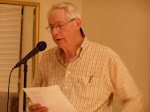
Pictured (L to R): Ellen Manning, Audrey Hawkins, Kay Abbuhl, John Abbuhl, Sherry Hawley, Sue Dearstyne-Abbuhl, Marion Menna, Judy White, Donna Stiglmeier
Wednesday, February 9, 2011
PHOTO OF VOLUNTEERS
This photo from the summer of 2010 by Mike Klugman shows many of our Pine Hollow Arboretum volunteers. These and other helpers, including Board Members, are a great resource and contribute to the effort needed to keep our place presentable.

Pictured (L to R): Ellen Manning, Audrey Hawkins, Kay Abbuhl, John Abbuhl, Sherry Hawley, Sue Dearstyne-Abbuhl, Marion Menna, Judy White, Donna Stiglmeier
Tuesday, December 14, 2010
DECEMBER VISIT

A snow storm sets up an opportunity to visit the Arboretum. There are lots of tracks when you get there. If you are lucky none of them will be human. Call ahead to (518) 439-6472 and John and Kate Abbuhl will make you welcome. I was dropping off the Pine Hollow Arboretum 2011 Calendar and brought my camera.


Tuesday, November 16, 2010
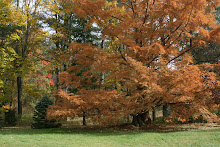
BALD CYPRESS

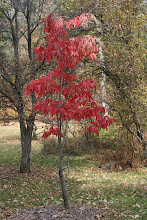
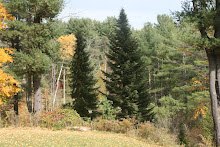
An example of the unique landscape at Pine Hollow Arboretum occurs late in the year when the view is filled with orange, rust and different brown colored trees as well as the different evergreens and yellow, brown and red deciduous hardwoods. One of the "rust" colors comes from the dozen or so Bald Cypress trees found in the Arboretum. The Bald Cypress or Swamp Cypress is a native American tree found in much of the southeastern United States from Maryland to Texas, especially inland up the Mississippi River to southern Indiana. It is common in the Everglades and is the official state tree of Louisiana. It is deciduous in the north and evergreen in the south. It has alternate, awl-shaped leaves, globose cones and sometimes aerial root knees.

The knees or upbent roots project from the root system upward above water level to facilitate gas exchange.Large trees reach 100-150 ft. tall with over 36 ft. trunk diameter. The Methuselah Cypress found in Big Tree Park in Longwood, Florida is 118 ft. tall and 3,500 years-old.

John Abbuhl points out they are a tree that will grow in standing water but they do not have to and will grow equally well in moist soil. John has found Bald Cypress can grow in the north provided the individual tree has the "right genetics". He doesn't think they have great variation in genetic make-up, as for example an apple tree has,but he has observed vast difference in growth pattern from individual tree to tree here in the Arborteum. He reported that there has been a 90% survival rate of Bald Cypress he has planted here. There is one area, however where it is different and 90% have not survived. He has observed it is where reed canary grass predominates. Bald Cypress are called "bald" because of their deciduous character. It is a member of the redwood family of trees. The true cypress belong to a separate family of trees. Like another decidous conifer found at Pine Hollow, the Metasequoia or "dawn redwood", the Bald Cypress dates from very ancient times. During the Jurasic Age it was a widely distributed tree. Two relatives of the Bald Cypress, the Weeping Bald Cypress and the Fastigate Bald Cypress are also present at Pine Hollow Arbouretum. The wood of the Bald Cypress was used by Seminoles for building their houses, canoes and for special ceremonial objects. The Choctaw Indians used the bark for string and rope. Making the wood useful is the fact it is extremely rot and termite resistant. In its native habitate it has been much used for roof shingles and traditionaly has a special use for greenhouse racks and benches. There is a current environmental concern over the use of cypress mulch as opposed to using cedar mulch. Damage to the ecosystem is being caused by the ravaging of cypress swamps in the south for mulch production. Cedar mulch seems more renewable and a more green choice
Sunday, November 14, 2010
Friday, October 29, 2010
Keep Visiting!

Pine Hollow is looking particularly beautiful these days - we are having a lovely fall this year. As we make the transition from fall in to winter we hope folks from Bethlehem and the greater Capital Region community continue to come on by to observe and enjoy the daily changes. PHA weekend Open Houses have concluded for this calendar year but anyone wishing to visit during the week or on weekends should contact the Arboretum by phone or email to arrange a time and date.
Visitor From Cornell

A few weeks ago, Nina Bassuk stopped by to visit with PHA Founder Dr. John Abbuhl. Dr. Bassuk is a Professor of Urban Horticulture in the Department of Horticulture at Cornell University in Ithaca, New York and Director of the Urban Horticulture Institute there. Dr. Bassuk is a world-renowned figure, and has led ground-breaking research in many areas of interest to the greater Pine Hollow Arboretum community. During a several hour tour Dr. Bassuk remarked that some trees at the Arboretum she had only read about or seen in pictures! She also indicated that she wished Slingerlands were closer to Cornell because she would use the arboretum as a lab for students. We hope to develop a closer relationship with Cornell, along with other schools in upstate NY whose students might be interested in our unique forest resource. Many thanks to PHA Board Member Chuck Smith for setting up this visit.
Thursday, October 21, 2010
BETHLEHEM SCIENCE TEACHERS VISIT

On October 12th Board Member and Bethlehem School District Science Education Coordinator Mike Klugman hosted a gathering of BCHS middle and high school teachers at the arboretum. About 20 "GREEN TEAM" people were in attendance. As a result of the visit Mike and Pine Hollow have received numerous emails from teachers, and others, suggesting ways the Arboretum and its facilities might be used to engage and educate students at all grade levels. While the Life Sciences might be the most obvious area to design and deliver curriculum material there are obvious connections to art, language and even various forms of media studies. Pine Hollow would also like to develop an easy to use curriculum that can be used by a lay person to lead a tour of the arboretum with children. Mike has already brought a few students to do geomapping at the arboretum and plans on expanding efforts in this area. We encourage any interested educators in the area, at any level of study, to take advantage of our unique forest resource. Please phone or email us! Phone:518-439-6472 and E-mail: pinehollowarb@aol.com
Subscribe to:
Posts (Atom)